Feature Time Spent Changed (Trigger)
Written By GoCSM
Last updated 6 months ago
Overview

The Feature Time-Spent Changed trigger activates when the amount of time users spend on a feature increases or decreases significantly.
Time spent reflects how engaged a user is at a deeper level and can reveal behavior changes before other metrics shift.
How the Trigger Works
This trigger compares time spent across different periods and detects changes based on your configuration.
Once triggered, workflows can:
Notify your team about engagement changes
Send proactive check in messages
Support onboarding or advanced usage
Trigger Filters
Filters give you control over which time-spent changes activate this trigger. There is one required Primary Filter and several optional Additional Filters that can be combined to target specific scenarios.
Primary Filter
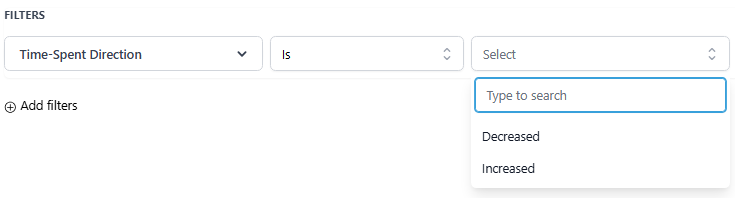
Time-Spent Direction (Required)
Sets whether the trigger fires when time spent on a feature is rising or falling.
Additional Filters
These filters are optional and can be combined to narrow down exactly which time-spent changes qualify and how often the trigger repeats.
Comparison Period
Defines the time window used to measure the change in time spent.
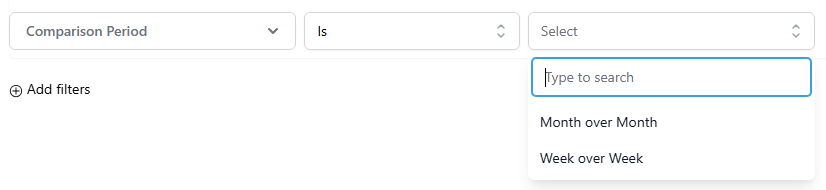
Use Week over Week for faster signals where you want to respond quickly to recent behavior changes. Use Month over Month for a broader view that smooths out day-to-day variation.
Features
Limits the trigger to time-spent changes on a specific feature. This allows you to build workflows with messaging and actions tailored to the feature being monitored.
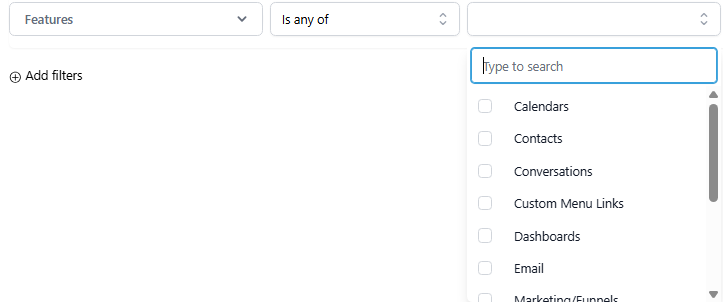
Available options:
Calendars
Contacts
Conversations
Custom Menu Links
Dashboards
Emails
Marketing / Funnels
Memberships / Courses
Opportunities
Payments
Reputation
Workflows
For example, you could create a workflow that fires when time spent in Memberships / Courses drops, indicating a learner may be falling behind, and a separate workflow for increased time in Opportunities, signaling a user who may be ready for a deeper sales conversation.
Percentage Threshold
Sets the minimum percentage change in time spent required before the trigger fires. This prevents the workflow from activating on minor day-to-day fluctuations.
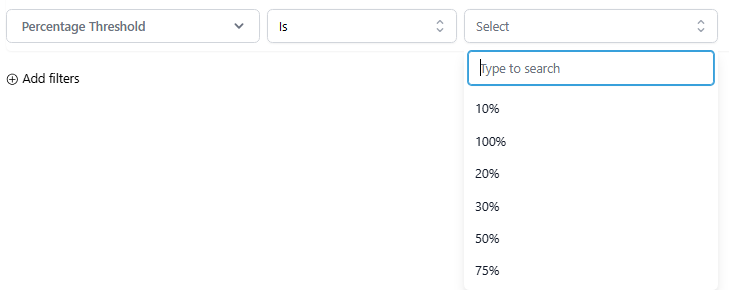
Available values: 10%, 20%, 30%, 50%, 75%, 100%
Use a lower threshold such as 10% or 20% to catch subtle early shifts in behavior. Use a higher threshold such as 50% or 75% when you only want to act on significant, meaningful changes in how a user is spending their time.
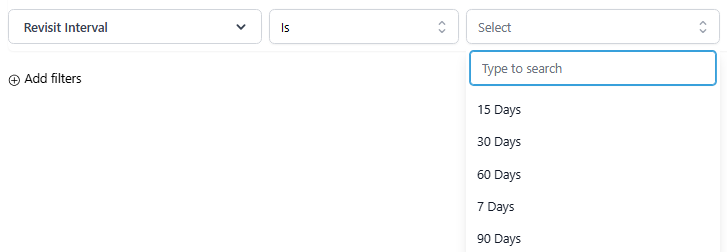
Revisit Interval
Controls how often this trigger can fire for the same account if the change in time spent persists across multiple check periods.
Required Setup: Find Contact Step

The workflow must connect time spent data back to a contact in your CRM.
The Find Contact step performs this mapping.
Example:
Field: Email
Value: {{feature_time_spent_changed.ownerEmail}}
This ensures that all actions are applied to the correct contact.
Without this step, the workflow cannot identify which customer the activity belongs to.
How to Build a Workflow Using This Trigger
Create a new workflow
Select Feature Time-Spent Changed as the trigger
Set the Time-Spent Direction primary filter
Apply additional filters to define the comparison period, feature, and percentage threshold
Set a Revisit Interval to control how frequently the trigger can repeat
Add the Find Contact step
Add your workflow actions
Publish the workflow
Recommended Uses
Detect early signs of disengagement when time spent drops. Often before usage frequency metrics shift
Identify users who are actively learning and exploring features such as Memberships / Courses or Marketing / Funnels, and send them advanced tips or next steps
Trigger onboarding support workflows when time spent on key features decreases shortly after signup
Alert your Customer Success team when time spent drops significantly on features that are central to the customer's use case
Build feature-specific workflows tailored to what that feature means for the customer. For example, declining Reputation time may signal a customer who has stopped managing reviews, while declining Opportunities time may flag a sales process breaking down
Was this helpful?
Still need help? Ask the team